If your floors still feel gritty after cleaning—or you keep seeing streaks and dull patches—it’s usually not your cleaner. It’s the order. For most homes, the cleanest, fastest routine is:
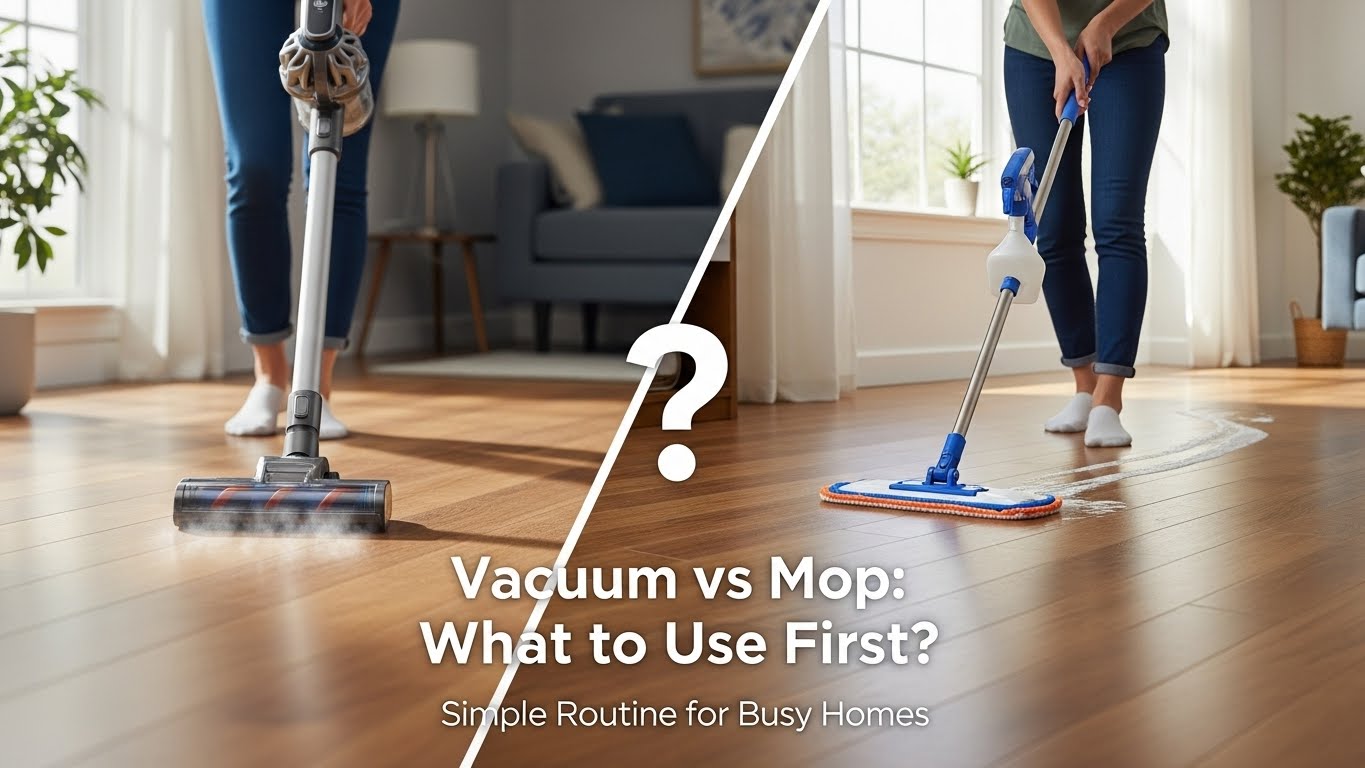
Vacuum (or dry sweep) first → Mop second.
That simple sequence prevents you from turning dust into muddy streaks, and it helps your mop water stay cleaner longer.
Below is a straightforward routine you can follow in a busy home, plus a few exceptions where the order changes.
The Short Answer (Most Floors)
✅ Vacuum first, then mop
Why:
- Vacuum removes grit, crumbs, hair, and fine dust that cause scratches and streaks.
- Mopping without vacuuming first can push dirt around and create a film—especially on tile and laminate.
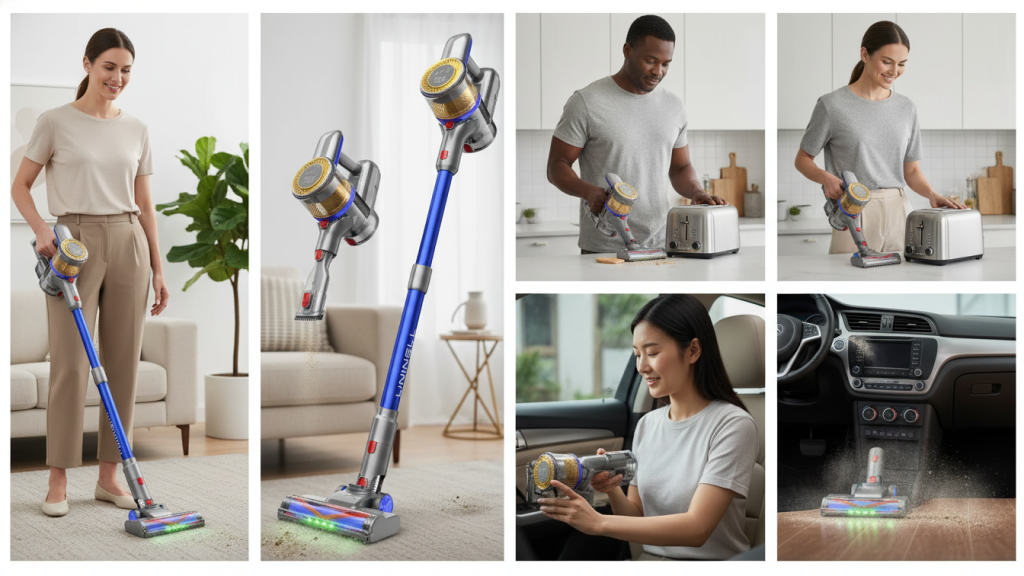
Why Vacuuming First Makes Mopping 10x Better
1) Less “mud” = fewer streaks
When you mop over dust, you basically make a thin slurry. On glossy tile and laminate, that dries into streaks.
2) Protects floors from micro-scratches
Hardwood and vinyl can get tiny scratches from sand-like grit. Vacuuming first removes the stuff that acts like sandpaper.
3) Your mop water stays clean longer
This is the biggest time-saver. Cleaner water = fewer bucket changes = better results.
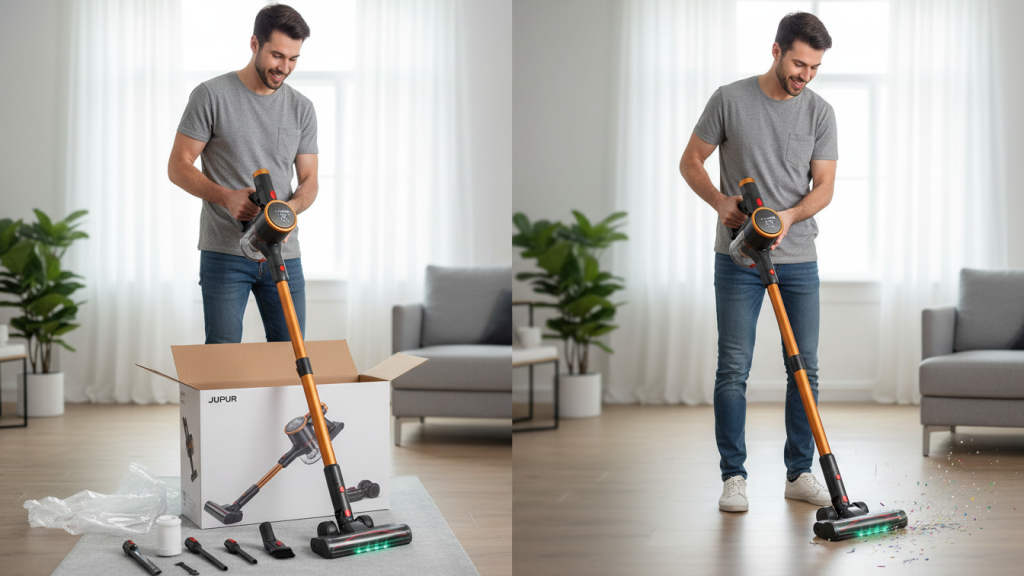
A Simple Routine for Busy Homes (15–25 minutes)
This is the “real-life” routine that works when you don’t have time to deep clean.
Step 1: Quick vacuum (5–10 minutes)
Focus only on:
- Entryway
- Kitchen (especially under table + stove area)
- Hallway pathways
- Pet zones
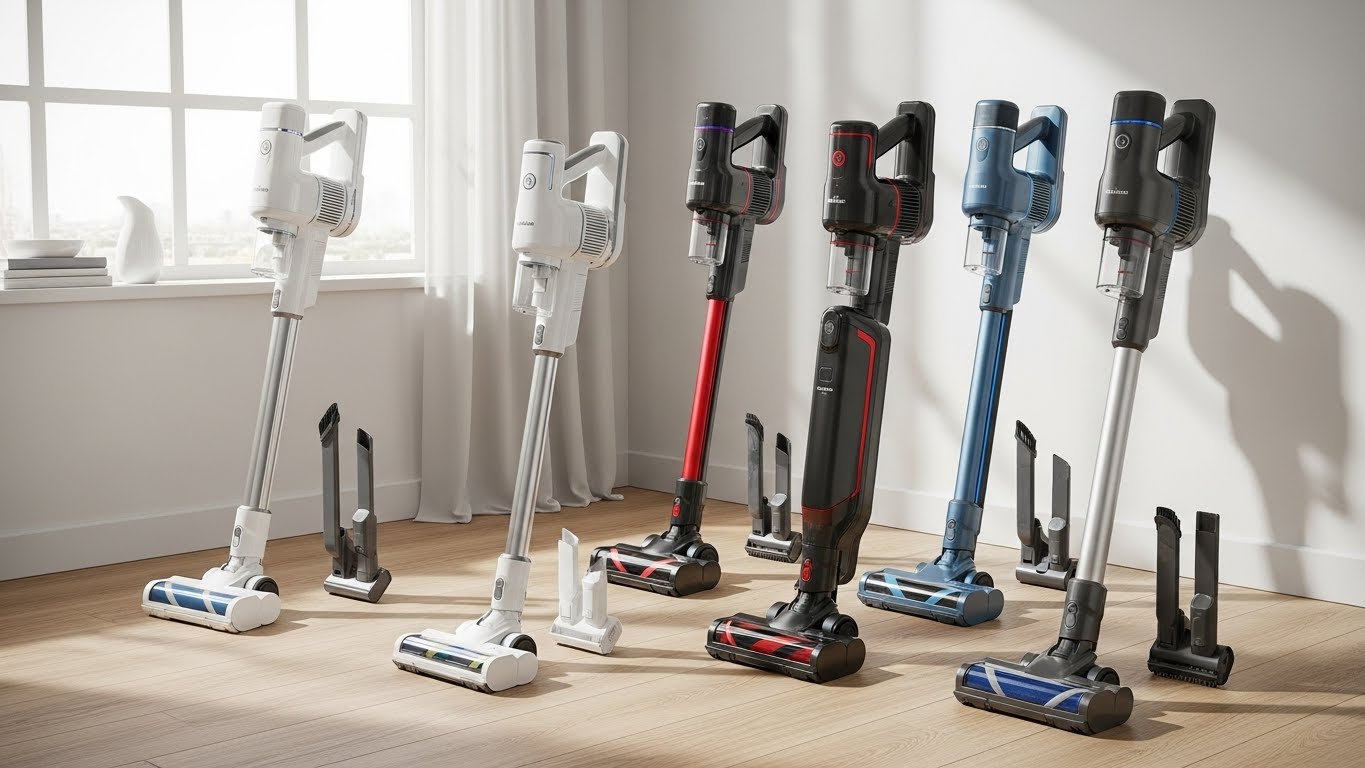
Tip: Use a cordless stick vacuum or a quick hard-floor setting—this is not the time for perfection.
Step 2: Spot clean sticky messes (1–2 minutes)
If you have dried spills (juice, sauce, coffee), scrape or wipe them first. Don’t drag a mop over them.
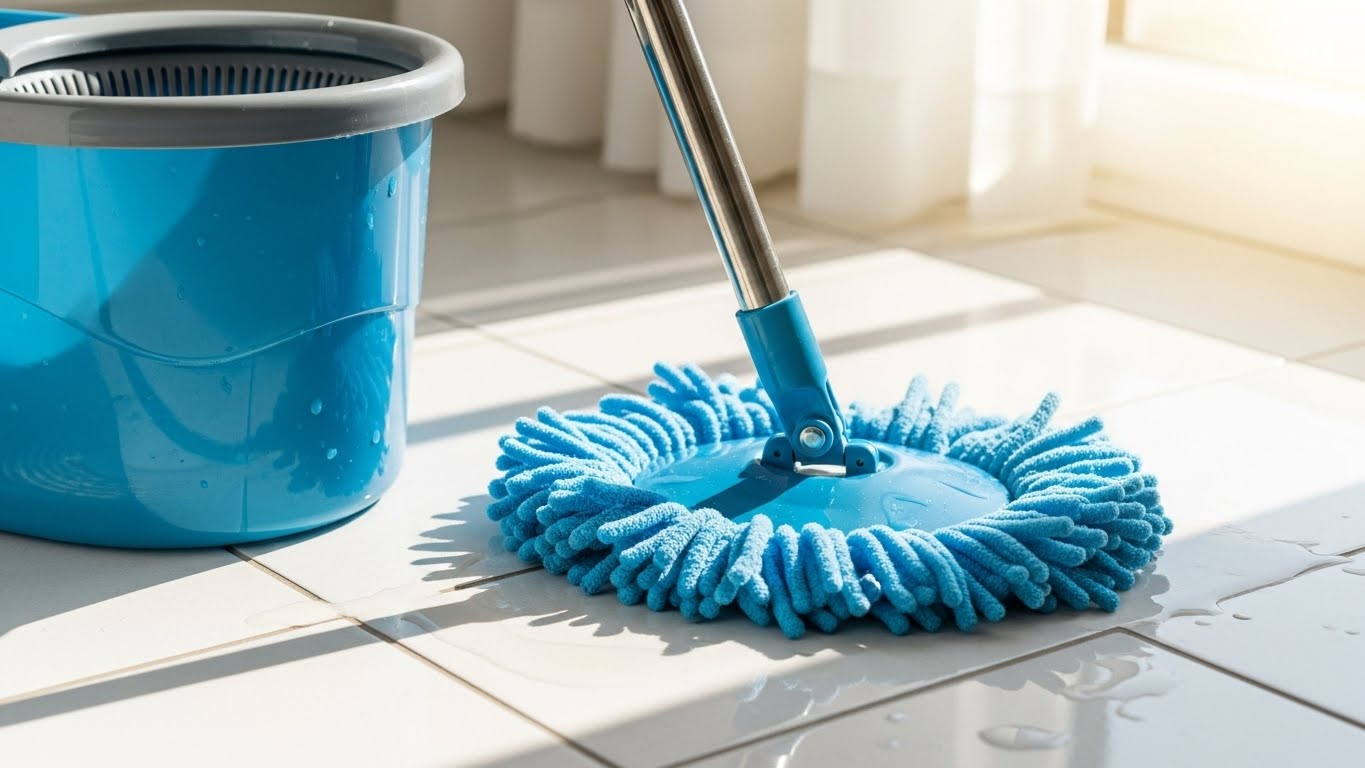
Step 3: Damp mop (8–12 minutes)
Key rule: Damp, not wet.
- Wring well
- Work in small sections
- Rinse often
- Finish with a lighter final pass in high-traffic zones
Step 4: Let it dry fast (optional, but helpful)
- Open a window for 5 minutes
- Turn on a ceiling fan
- Avoid walking on it until it’s dry (this prevents footprints + re-dirt)
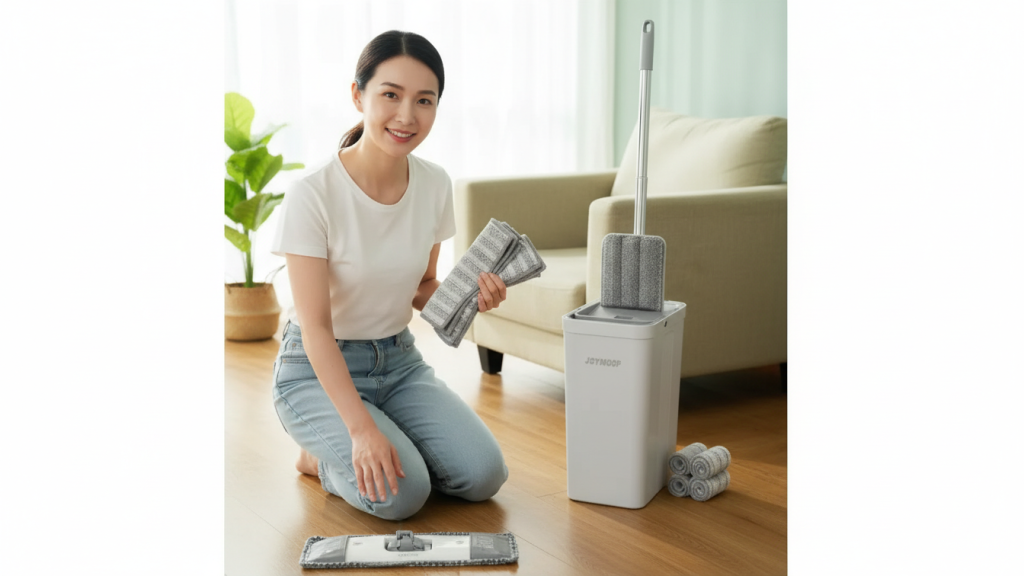
When You Might Mop First (Rare, but it happens)
1) You’re cleaning up spilled liquid
If there’s muddy water, juice, or soup, blot/wipe first—then vacuum after it’s fully dry.
2) Heavy salt or wet slush (winter entryway)
Wipe it up, then vacuum the gritty leftover salt once dry.
3) Dust only (no sticky grime)
If your floor is mostly dusty, you may skip wet mopping and just do:
Vacuum → dry microfiber mop
This is often enough for daily maintenance.
Best Routine by Floor Type
Hardwood
✅ Vacuum first (soft roller if possible)
✅ Damp mop second (minimal water)
Avoid soaking—water is the enemy of wood.
Tile
✅ Vacuum first (especially grout lines)
✅ Mop second
Use less cleaner than you think to prevent film.
Laminate
✅ Vacuum first
✅ Mop second (very damp, quick dry)
Laminate hates excess water.
Vinyl / LVP
✅ Vacuum first
✅ Mop second
Good with damp mopping, but still streaks if you mop dust first.
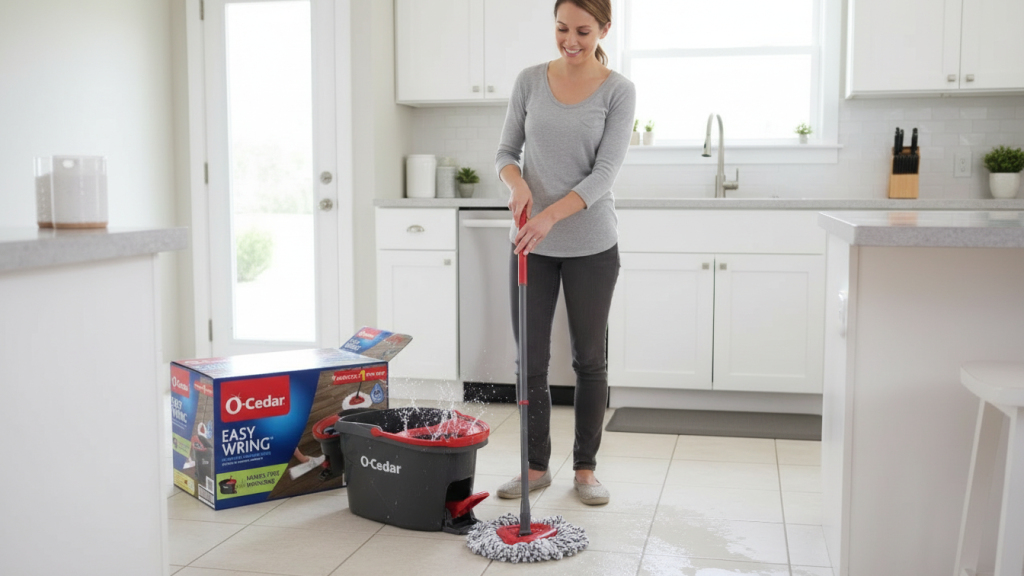
Common Mistakes That Make Floors Look Dirty After Cleaning
- Mopping before removing dust/hair
- Using too much floor cleaner (causes residue)
- Not wringing enough (too wet = streaks)
- Not rinsing/refreshing water (you re-spread dirt)
- Using one pad/head for everything (kitchen grease + bathroom = bad combo)
Quick FAQ
Do I need to vacuum every time before mopping?
If you want streak-free results, yes. Even a 3-minute quick vacuum makes a big difference.
What if I only have a broom?
Same idea: sweep first, mop second. A microfiber dust mop is even better for fine dust.
Can I use a vacuum-mop combo machine?
They’re convenient, but you’ll still get the best results when you remove dry debris first (or use the vacuum-only mode before wet mode).