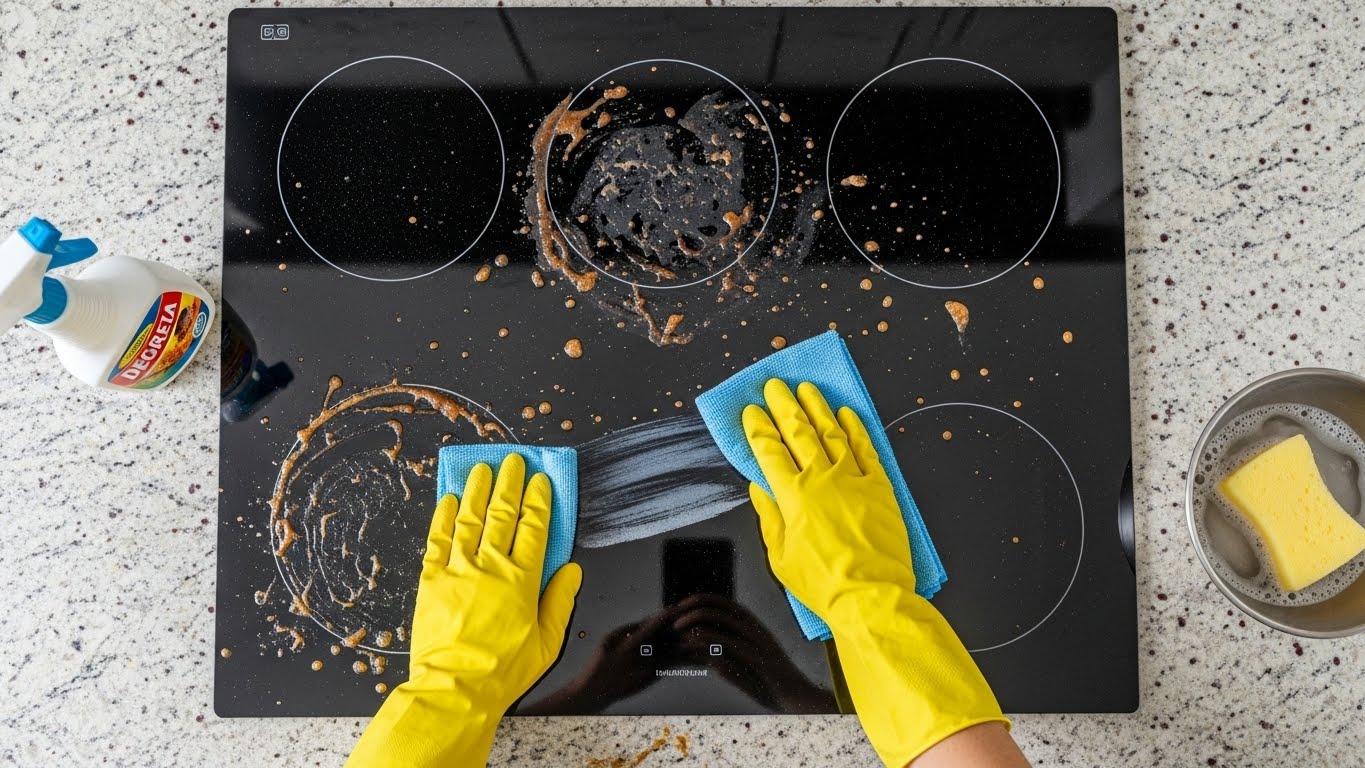
A greasy stovetop is mostly oil + cooked-on residue. The fastest way to clean it isn’t scrubbing harder—it’s using the right cleaner for your stovetop type and letting it dwell (sit) long enough to break the grease.
Below is a simple, step-by-step routine that works for busy homes, plus product-style options like the ones shown (Weiman, oven/grill degreaser, multi-surface degreaser).
Before You Start: Identify Your Stove Top
Cleaning changes based on surface:
- Glass / ceramic cooktop (flat and shiny): needs gentle, non-scratch tools and a cooktop cleaner/polish
- Gas stove (grates + burner caps): needs degreasing + soaking for parts
- Induction: same as glass/ceramic (treat like a glass cooktop)
If you’re not sure: if it’s a smooth black surface, treat it as glass/ceramic.
The 10–15 Minute Routine (Works for Most Greasy Stovetops)
Step 1: Cool + dry wipe (1 minute)
Make sure the stove is cool.
Wipe loose crumbs with a dry microfiber cloth or paper towel.
Why: grit = scratches when you start wiping.
Step 2: Pre-soften grease (2–3 minutes)
Spray a little warm water (or lay a warm damp towel) over greasy areas for 1–2 minutes.
Why: warm moisture loosens oil faster and reduces scrubbing.
Step 3: Apply the right cleaner (2 minutes)
Pick based on your stovetop type:
For glass/ceramic cooktops (best choice)
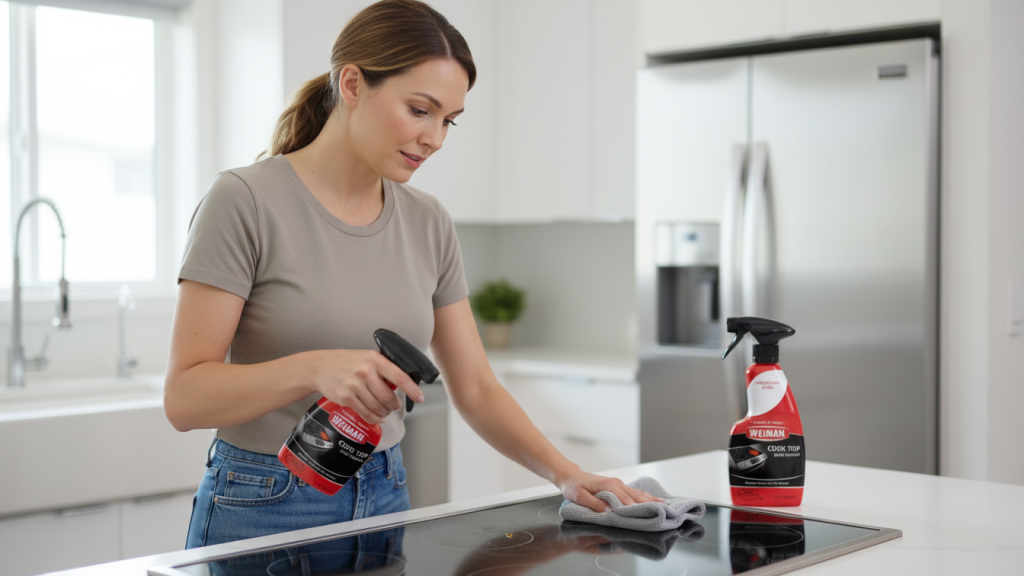
Weiman Glass Cooktop & Stove Top Cleaner Kit

- Great for burnt-on food + grease
- Usually includes a scraper + scrub pad designed for cooktops
Typical price: around $21.98
OR for everyday maintenance:
Weiman Glass Cooktop Cleaner & Polish (Daily Use)
For gas stovetops / heavy grease splatter

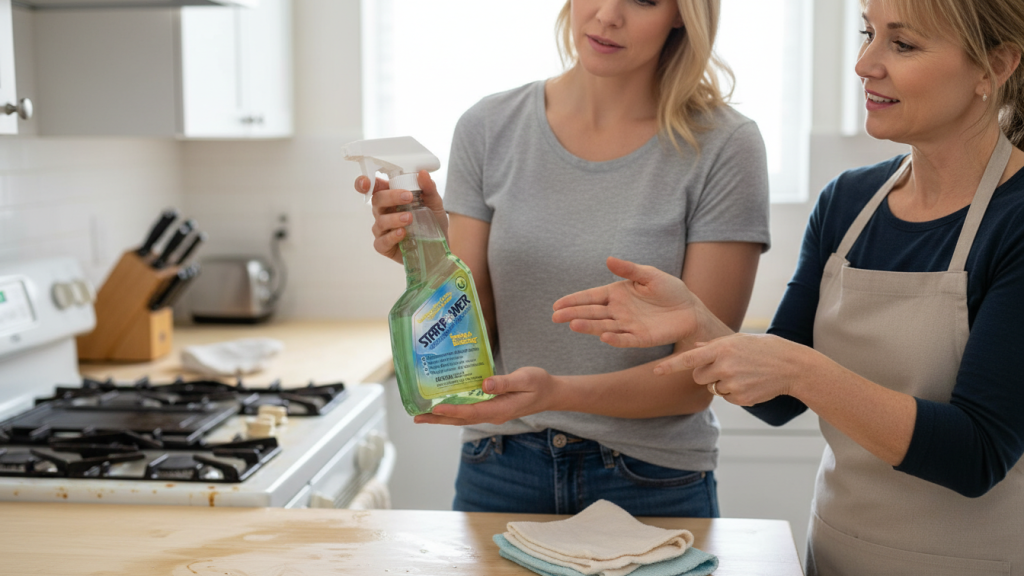
Starpower Heavy Duty All Purpose Multi-Surface Grease Remover
Typical price: around $13.00
For extreme baked-on grime (use carefully)
Oven and Grill Cleaner / Degreaser (32 oz)
Typical price: around $16.98
Use this mainly for grates or heavy buildup—not as your first choice on glass cooktops.
Safety note: Don’t mix cleaners. Ventilate well. Wear gloves if using strong degreasers.
Step 4: Let it dwell (the “no scrub” secret) — 3 to 5 minutes
Give the cleaner time to break down oil.
If you skip this, you’ll scrub longer and risk scratches.
Step 5: Wipe + gentle agitation (3–5 minutes)
- Use a microfiber cloth for wiping.
- For cooked-on spots:
- Glass/ceramic: use the scraper at a low angle (like shaving), then wipe again
- Gas stove: use a non-scratch scrub pad on the surface and around burners
Do not use steel wool on cooktop glass.
Step 6: Final rinse + dry (2 minutes)
Wipe with a clean damp cloth to remove residue, then dry with a clean microfiber cloth.
Why: leftover cleaner or grease film = streaks and haze.
Quick Instructions by Stove Type
Glass / Ceramic / Induction (No Scratches)
Best approach: Cooktop cleaner + scraper + microfiber
- Use cooktop cleaner/polish (Weiman-style)
- Scrape only on stubborn spots
- Buff dry for a streak-free finish
✅ Fastest results with the least risk.
Gas Stove (Grates + Burners)
Best approach: degrease + soak parts
- Remove grates and burner caps
- Spray degreaser and let sit
- Scrub, rinse, dry fully before reinstalling
- Wipe the base and knobs carefully
Tip: Soaking grates in hot water + dish soap makes scrubbing much easier.
The Biggest Mistakes That Keep It Greasy
- Trying to clean while it’s still warm (product dries too fast)
- Skipping dwell time
- Using the wrong tool (abrasive pads on glass)
- Not doing a final rinse wipe (leaves haze)
- Using too much product (more product = more residue)
How to Keep It Clean (30 seconds a day)
- After cooking, once cool: quick wipe with a damp microfiber cloth
- Once a week: proper clean with cooktop cleaner/polish
This prevents “baked-on layers” that take forever later.
FAQ
Can I use oven cleaner on a glass cooktop?
I wouldn’t as a first choice. Glass cooktops do best with cooktop-specific cleaners to avoid damage and haze.
How do I remove burned sugar or melted plastic on a glass cooktop?
Let the surface cool, use a cooktop scraper carefully at a low angle, then finish with cooktop cleaner.
Why does my cooktop look cloudy after cleaning?
Usually residue. Do a final wipe with a damp cloth, then buff dry.
If you tell me your stove type (glass/ceramic vs gas) I can tighten this into a “single best method” version and pick the best product from the list for that exact surface.